Recent searchs
Status
Awaiting Environmental Impact Statement
End
Dec 2032
CelZa and the National Hydrogen Transport Hub
CelZa
The CelZa project is one of the core components of H2med. This is the future onshore interconnection between Portugal and Spain, via a gas pipeline approximately 270 km long, dedicated entirely to the transport of green hydrogen.
It connects Celorico da Beira (Portugal) to Zamora (Spain) and runs for approximately 185 km in Portuguese territory and around 86 km in Spanish territory.
This infrastructure will establish a physical link between the two countries’ future national hydrogen backbones, creating an essential energy bridge for the distribution of hydrogen produced in the Iberian Peninsula to the rest of the European market.
By enabling the large-scale export of hydrogen from renewable sources, notably solar and wind power, CelZa will strengthen Portugal’s position as a competitive producer of clean energy and as a strategic hub in the European low-carbon energy system.
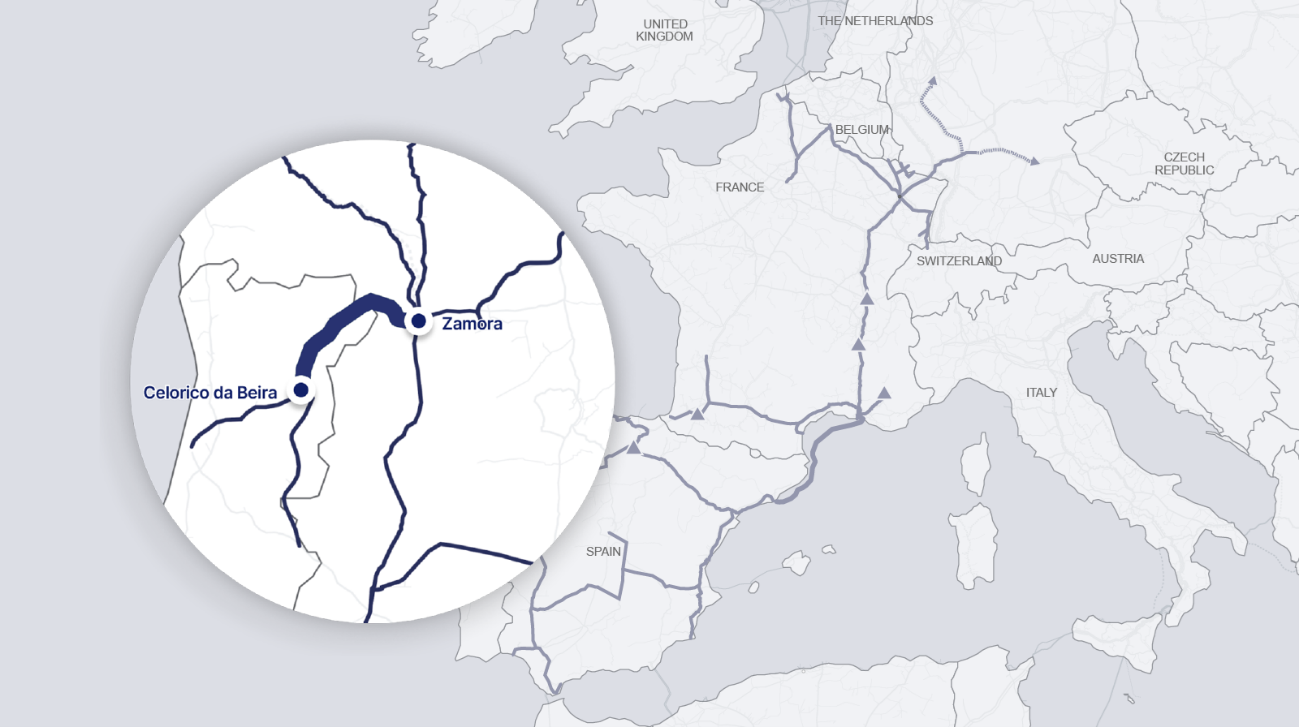
Key figures for CelZa
Length: 270 km
Transmission capacity: 0.75 Mt/year (MTPA) of green hydrogen
Estimated budget: around 350 million euros
Expected commercial operation date (COD): 2032
The project forms part of the cooperation between the Transmission System Operators (TSOs) of the two countries, namely REN in Portugal and Enagás in Spain, ensuring integrated and efficient management of the cross-border corridor.
National Hydrogen Transport Backbone
Complementing CelZa, the development of a national hydrogen backbone in Portugal, known as the Portuguese Hydrogen Backbone, will form the core of the country's future hydrogen infrastructure.
This backbone will connect the main green hydrogen production hubs to industrial consumption centres, urban areas and export points. It will lay the foundations for a robust domestic market that is fully interconnected with the European H2med corridor.
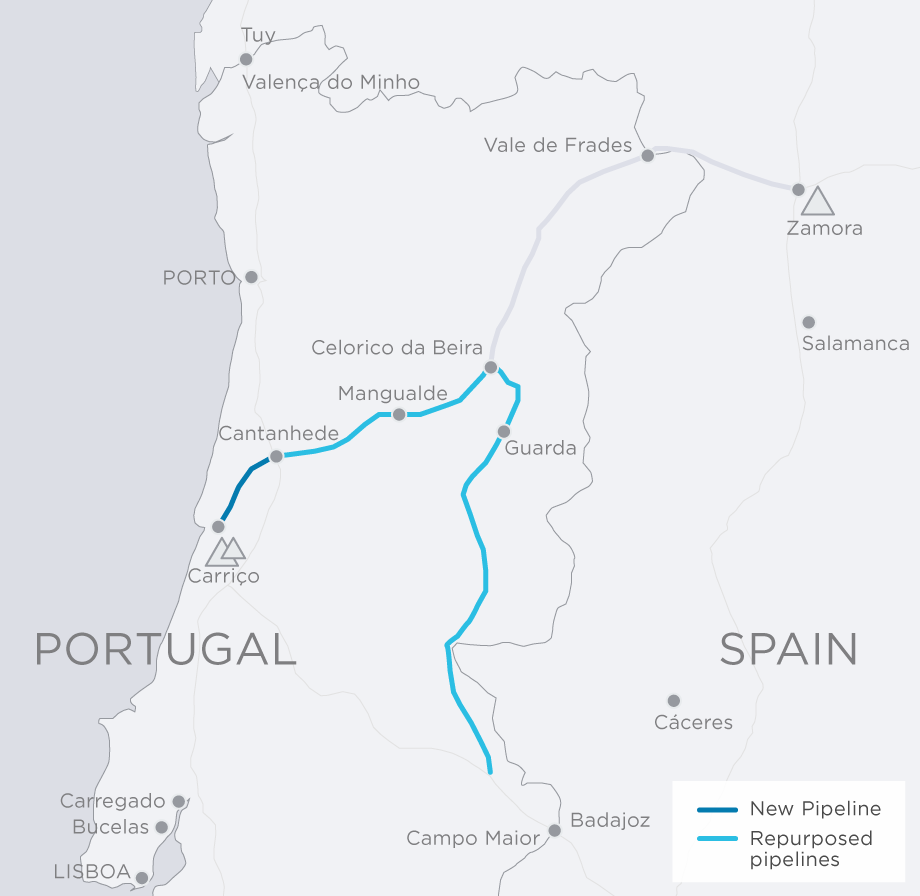
The project involves the adaptation of natural gas transmission infrastructure and the construction of new sections specifically designed for hydrogen transport. It ensures complementarity with CelZa and its integration into the future European hydrogen transport system, the European Hydrogen Backbone.
The project will initially examine the possibility of converting the existing Cantanhede – Celorico da Beira – Monforte gas pipeline corridor to transport 100% hydrogen, and the construction of a new linear infrastructure between Figueira da Foz and Cantanhede, thereby strengthening the connection to potential production and export areas on the central coast.
Key figures for the National Hydrogen Transport Backbone
Total length: 405 km
- 65 km of new pipeline dedicated to hydrogen
- 340 km of pipeline running alongside existing natural gas infrastructure
Transmission capacity: 0.75 Mt/year (MTPA) of green hydrogen
Estimated budget: 203 million euros
Expected commercial operation date (COD): 2032
H2med
H2med is a European green hydrogen transport project that aims to connect Portugal and the Iberian Peninsula to Europe’s main energy markets.
Developed by Portugal, Spain, France and Germany, with the support of the European Commission, this energy corridor plays a key role in the transition to a low-carbon economy that is less dependent on fossil fuels.
Launched in 2022 and developed in a coordinated manner by the network operators along this corridor, the project is based on two main components: the CelZa onshore link (Celorico da Beira–Zamora) and the BarMar subsea section (Barcelona–Marseille), complemented by national hydrogen networks (backbones).
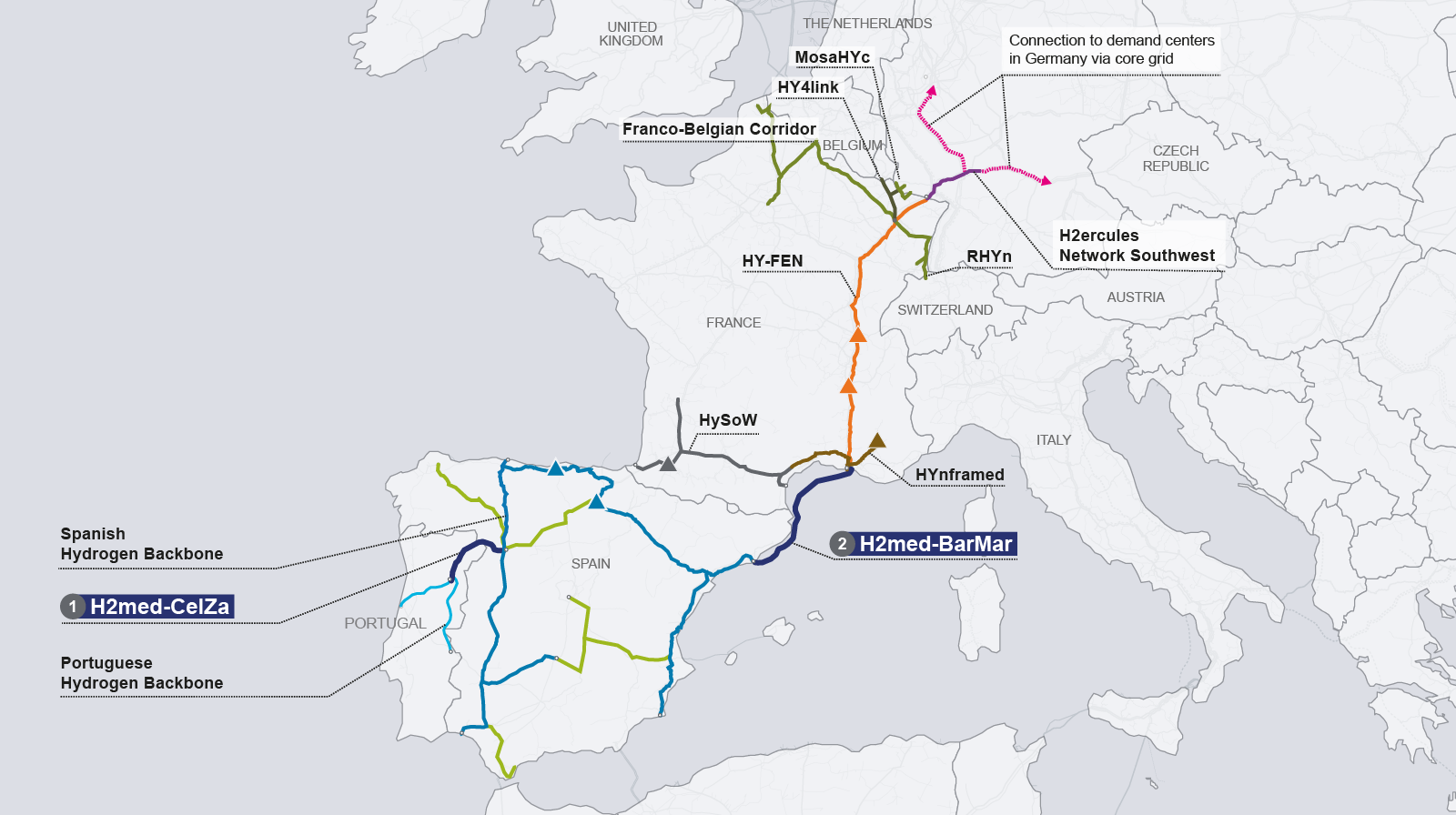
The project will enable renewable hydrogen produced on the Iberian Peninsula to be transported to European regions with high industrial demand. It will contribute to the decarbonisation of the economy, the strengthening of energy security and the enhancement of the competitiveness of European industry.
Scheduled to come into operation at the start of the next decade, it is one of the key infrastructure projects for the development of the European clean hydrogen market.
H2med has been recognised by the European Union as a strategic project and included on the list of Projects of Common Interest under the TEN-E Regulation, which provides access to European funding for studies and infrastructure development.
H2med contributes to the integration of the European energy market and to reducing the Iberian Peninsula’s energy isolation. At the same time, it positions Portugal as a potential hub for the production and export of renewable hydrogen.

 REN - CelZa and the National Hydrogen Transport Backbone


0:00
/
0:00